
Bench-Top or Portable Hardness Tester: Which Workpiece Needs Which
Hardness testers split into two families before anything else. Choosing wrong has a direct cost: a bench unit cannot test an installed part, and a portable unit cannot produce arbitration-grade data.
Bench-top: accuracy first
Fixed on a bench, the workpiece must be brought to it and must sit stably. The advantage is stable load and repeatability – the right tool for laboratories, incoming inspection and arbitration.
The limitation is obvious: workpiece size is constrained by the throat and the height adjustment. Installed equipment and large castings or forgings simply cannot be lifted onto it.
Portable: position first
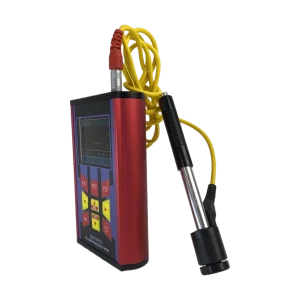
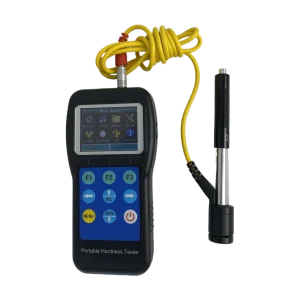
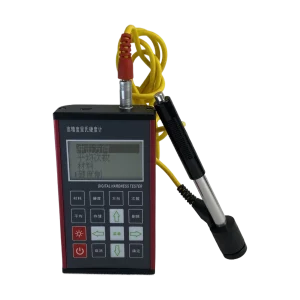
A portable unit goes to the workpiece: installed machinery, assembled components, large moulds and in-service equipment.
The cost is sensitivity to surface and thickness. The surface must be ground to bare metal, and the section must be at least several times the indenter or impact body size, or the readings scatter.
Then split by principle
Leeb (rebound): the mainstream portable method, for large parts and field work. Values are converted by material.
Brinell: large indentation with good representation, for castings and forgings; usually bench-top or heavy portable.
Rockwell: fast, small mark, the workshop favourite; particularly suited to thin sections and small specimens.
Vickers: a clean square indentation, from very soft to very hard; the standard for laboratory and thin-layer measurement.
How to decide
Ask three questions: can the part be moved? is a mark acceptable? do you need an arbitration report or a shop-floor decision?
Movable and reportable – bench-top. Immovable and judgement only – portable. Both – a portable unit for screening plus a bench unit for confirmation, which is what most plants actually run.
Summary
Bench and portable are not high and low tiers of the same thing. They serve different situations: decide the situation, then the principle, and only then compare specifications and price.
Related products
Tell us the workpiece, thickness range and accuracy you need — we will reply within 8 hours.