
Using a Portable Hardness Tester in Heat and Cold
The instrument does not fear temperature itself - it fears the drift temperature causes. Heat pushes circuit parameters off, cold kills batteries and displays. The two ends need different answers.
High temperature
Electronic components drift when held at temperature: solder joints age faster, capacitor and resistor values move away from nominal, and the symptom is jumping readings or a unit that locks up.
The first line of defence is insulation – a high-temperature, low-conductivity boot in ceramic fibre or a specialised silicone. For long stints beside a furnace, a water-cooling loop is available. Between measurements, put the instrument somewhere shaded and ventilated rather than letting heat accumulate. Clean the fan and the air path on a schedule; a clogged path turns a warm instrument into a hot one.
Low temperature
Battery activity falls and runtime collapses; the liquid crystal responds slowly and the display goes faint; grease thickens and moving parts drag.
Warm the battery before use, or carry a spare and rotate. Specify a low-temperature display and give it a few minutes powered on before measuring. Change to low-temperature lubricant, and operate gently – forcing a stiff mechanism damages precisely the parts you cannot replace.
Accuracy depends on routine maintenance
Calibration comes first: check against a reference block of known hardness at least weekly and keep the indication error inside tolerance.
The probe is the part that touches the workpiece, so protect it from impact and deformation, clean it after every use, and store the instrument dry with a desiccant in the case. Transport it in foam, not loose in a tool bag.
Technique details that matter in the field
Spread measurement points evenly and avoid edges and holes where stress concentrates; average several readings per area. Apply force steadily – a fast impact leaves an irregular indentation. Match test force to the material and section: heavy for thick work, light for thin.
None of this is exotic. It is the difference between an instrument that survives a winter on site and one that comes back for service twice a year.
Related products
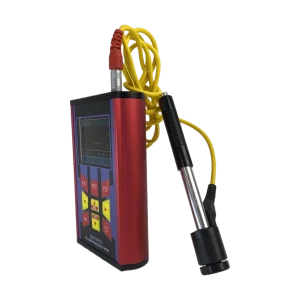
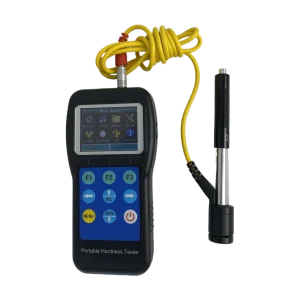
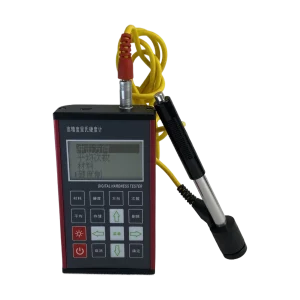
Tell us the workpiece, thickness range and accuracy you need — we will reply within 8 hours.