
Coating Thickness Measurement: Magnetic, Eddy Current or Ultrasonic?
The question we hear most is simply "which method for my substrate". Here is how the three main routes divide the work.
Magnetic induction: for steel
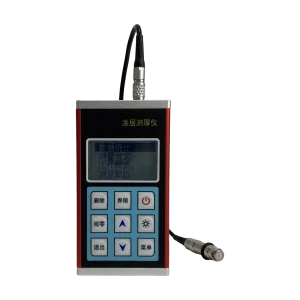
A coil generates an alternating magnetic field that passes through the coating and acts on a ferromagnetic substrate, inducing eddy currents there. The coating thickness changes the reluctance of that path, which changes the coil impedance. The instrument converts that change into thickness.
This route covers non-magnetic coatings on steel, iron and nickel – paint, zinc, plastics. Stable, repeatable and inexpensive, it is the workhorse for steel structures and automotive bodies.
Eddy current: for aluminium, copper and stainless
A high-frequency coil induces eddy currents in a conductive substrate. Coating thickness affects their intensity, which changes coil impedance. Suitable for non-conductive coatings on non-ferromagnetic metals: anodising on aluminium, paint on copper, coatings on stainless.
Ultrasonic: non-metal and multilayer
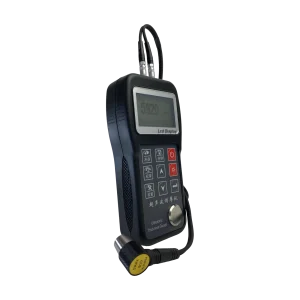
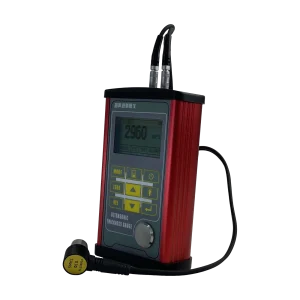
Pulse-echo measures the reflection time at the coating-substrate interface. It does not depend on electromagnetic properties, so it works on plastic, wood and concrete substrates and on multilayer stacks.
Do not confuse this with "through-coating" ultrasonic gauges that ignore the coating and read the steel wall beneath it – that is a different instrument for a different question.
Choosing between them
Confirm the substrate first: ferrous means magnetic induction, non-ferrous conductive means eddy current, mixed production means a dual-principle gauge.
Then decide the form: handheld for field work, separate probe for cavities, benchtop for laboratory accuracy.
Practical notes
Calibrate on the same substrate you are measuring, not on the bench. Avoid edges, weld beads and corners where the probe cannot sit flat. Record the method and instrument with the data – a thickness number without its method is not comparable.
Related products
Tell us the workpiece, thickness range and accuracy you need — we will reply within 8 hours.