
Magnetic or Eddy Current? Choosing a Coating Thickness Gauge
Two physical principles, two substrate families. Pick by what the coating sits on, not by price or by which one the salesman has in stock.
Why thickness has to be measured
Too thin and the barrier is incomplete, so corrosion starts early. Too thick and you waste material, and the film may crack or flake, which accelerates failure. Bridges, ship hulls, chemical tanks and pipelines all treat coating thickness as an acceptance criterion.
Magnetic induction: steel substrates
A coil generates an alternating field that crosses the coating and acts on the ferromagnetic substrate, inducing eddy currents there. The coating thickness changes the reluctance of that path and therefore the coil impedance.
Use it on non-magnetic coatings over steel, iron and nickel: paint, zinc, plastics. Stable and repeatable, it is the workhorse for heavy-duty corrosion protection.
Eddy current: aluminium, copper, stainless
A high-frequency coil induces eddy currents in a conductive but non-ferromagnetic substrate. Coating thickness changes their intensity and hence the coil impedance. Suitable for anodising on aluminium, coatings on copper and stainless, and similar combinations.
The same instrument across four stages
During application it tunes pressure, distance and number of passes, avoiding thin spots and wasted material. At acceptance it produces the numbers that decide whether the job passes. In service, periodic re-measurement detects thinning and triggers touch-up before corrosion spreads.
Three selection points
Confirm the substrate first: ferrous, non-ferrous, or both on one line (dual-principle gauge). Then look at statistics – average, max, min and standard deviation save a lot of manual recording. Finally the probe: curved, small-area and high-temperature work each need a specific one.
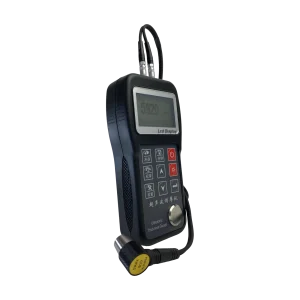
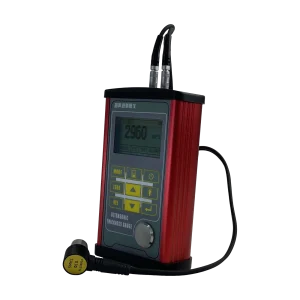
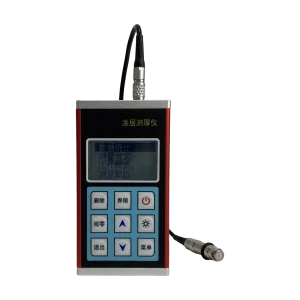
Related products
Tell us the workpiece, thickness range and accuracy you need — we will reply within 8 hours.