
Pocket Roughness Tester: What Shrinking Costs You
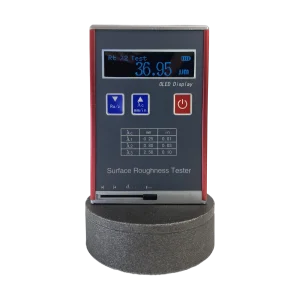
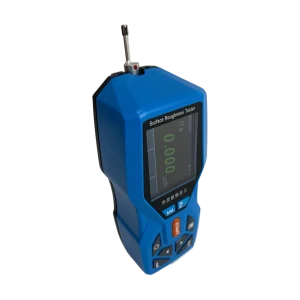
A palm-sized body has to fit a stylus, a drive, the electronics, a screen and a battery. Everything gives way a little, and those concessions are the limits of the instrument.
1. How the size was achieved
Three routes: integrate the electronics (amplification, filtering, A/D and computation on one controller), tighten the mechanics (stylus and drive as one module), and simplify the interface (a few keys and a small screen instead of a panel).
None of that changes the principle. It is still a stylus instrument, and the stylus still has to cross the surface under constant load.
2. Where the concessions land
Range and resolution: the sensor stroke is short, so very thin and very thick workpieces sit outside its comfort zone.
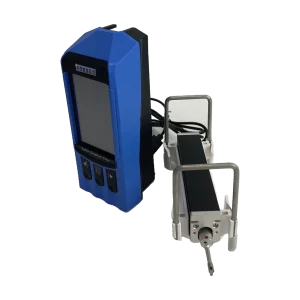
Fixed probe: the integrated design means a worn stylus sends the whole unit back, and there is no small-bore probe for a deep groove.
Heat and runtime: a small housing warms up during long sessions, and battery capacity limits heavy use.
Stability: low mass means hand tremor reaches the stylus more easily, so the reading is more likely to jump than on a bench unit.
3. Some honesty about the marketing
Brochures mention MEMS silicon stylus arrays, cloud sync and automatic defect recognition. Those directions exist, but in a palm-sized industrial roughness tester the mainstream is still a diamond stylus with digital filtering.
If you see that language, ask three questions: what is the stylus material and tip radius, which cutoffs are available, and what reference specimen is used for calibration. If those cannot be answered, the rest is packaging.
4. Where it genuinely belongs
Workshop patrol inspection, judging incoming parts on the spot, measuring large parts in place, and teaching. Those cases want a number now, not a report later.
Summary
The boundaries are clear: fast enough, portable enough, good enough – but not for arbitration, not for ultra-precision, not for deep bores. Accept the boundary and it is a handy tool.
Related products
Tell us the workpiece, thickness range and accuracy you need — we will reply within 8 hours.