
Pocket Roughness Tester: What a Small Body Can and Cannot Do
A pocket unit fits in a palm, and pays for it in range, probe and stability. Knowing which jobs it covers is more useful than reading the spec sheet.
1. What it does well
Quick judgement on the floor. Whether a machined face is smooth enough, answered in seconds instead of a trip to the inspection room.
Large parts and equipment in service. Machine beds, big moulds, workpieces already clamped – a pocket unit can be laid on them where nothing can be moved or removed.
Routine sampling. Comparing parts from one batch to see whether the process is holding is more realistic with a pocket unit than with a bench instrument.
2. What it is not for
Arbitration and acceptance. Where a report has to stand against a standard, use a bench instrument with a calibration certificate; the traceability chain behind a pocket unit is usually weaker.
Mirror surfaces below Ra 0.1 um. Resolution and noise immunity are both short at that level.
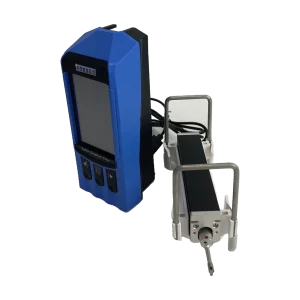
Deep bores and narrow slots. An integrated unit will not reach; that is a job for a split-type instrument.
3. What the construction implies
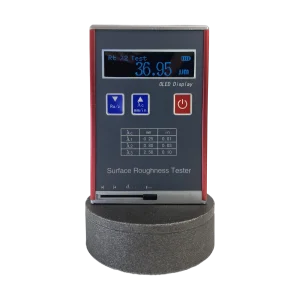
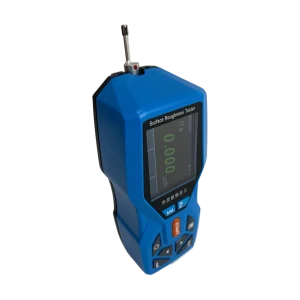
Most pocket units are stylus instruments with sensor, electronics, display and keys in one housing. The integration buys portability, and it means the probe cannot be changed – once the stylus wears, the whole unit goes back. So do not knock it, and do not drag it across a rough casting.
4. Points in use
Confirm the surface is free of oil and debris before measuring. Keep the point away from edges and raised features. Hold the body steady; a moving housing is just an extra vibration source at the stylus.
Where temperature swings, let the unit settle for a few minutes. A small housing loses heat quickly, so temperature affects the reading more than it does on a bench instrument.
Summary
Treat a pocket tester as a field judge, not a metrology standard, and its value is clear: fast, able to reach the part, good enough. When a report or an arbitration is needed, hand the job to the bench.
Related products
Tell us the workpiece, thickness range and accuracy you need — we will reply within 8 hours.