
What a Colour Screen Actually Changes on a Flaw Detector
From monochrome to colour, the display has changed three times. It does not change the physics; it changes how fast you read a waveform, how sure you are, and whether you can see the screen at all.
1. Waveform reading: colour carries information
An A-scan is a curve rising and falling against time. On a monochrome screen the defect echo, the initial pulse, the backwall and the grass are all the same grey, separated only by position and height – and after an hour the eye tires.
A colour screen can band the display: different tones for different amplitude ranges, the DAC curve in its own colour, the alarm zone in red. You read colour first and shape second, and the decision comes faster.
On volume work this shows up plainly. Several hundred waveforms a day means eye fatigue translates directly into missed indications.
2. Visibility: the difference in daylight
Most inspection happens in a workshop, on site, or inside equipment. A monochrome screen washes out in strong light and needs a hand cupped over it; a bright colour screen with a wide viewing angle can be read off-axis.
On the datasheet this is one brightness figure. The real difference is large, so ask for a look outdoors before buying.
3. Information density: how much fits on one screen
Colour allows the screen to be split: waveform on the left, parameters on the right, status along the bottom. Gain, velocity, probe angle, active channel and charge all visible at once, with no paging.
Less paging means fewer wrong-button events, and a good share of field incidents come from a parameter knocked one step out.
4. What gets oversold
Claims about automatic defect classification and wireless remote expert review appear in the brochures. The first works acceptably on reference blocks and still needs a human on real workpieces; the second depends on a network, which a site rarely has.
Treat the colour screen as a tool that lets you see more clearly, not one that judges for you, and expectations stay in line.
Summary
A few parts a day in steady light: monochrome is enough. Several hundred weld scans a day, often outdoors or inside equipment: the gain in efficiency is real.
Related products
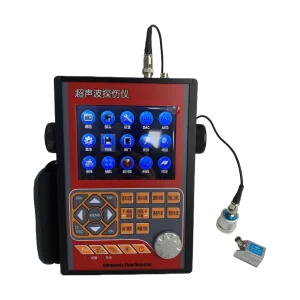
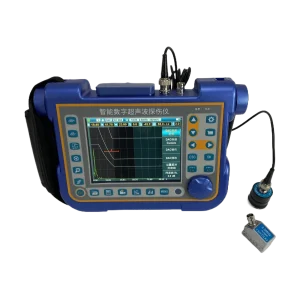
Tell us the workpiece, thickness range and accuracy you need — we will reply within 8 hours.