
What Ultrasonic Flaw Detection Finds in Six Industries
Non-destructive testing is an abstract phrase. Here is what each industry actually inspects, and which failure it is trying to prevent.
1. Aerospace
Engine blades, airframe structure, landing-gear forgings. What is looked for is fatigue cracking and casting defects; what is prevented is failure in flight. These parts tolerate no critical defect, so the sensitivity requirement is the highest anywhere.
2. Automotive
Engine blocks, frames, suspension welds and castings. What is looked for is porosity, shrinkage and lack of fusion; what is prevented is a quality failure that runs through a whole batch.
3. Machinery manufacturing
Shafts, gears, flanges, forgings. This is the widest use of all, mostly incoming inspection and between-process sampling.
4. Rail
Axles, wheelsets, frame welds. Parts under alternating load are where fatigue cracks appear first, and periodic testing is mandatory rather than optional. What is prevented is a broken axle.
5. Construction and bridges
Structural steel welds, high-strength bolted joints, cast-steel nodes. What is looked for is lack of penetration, slag and cracking; what is prevented is structural failure. Much of this work happens on site, so portability counts.
6. Oil and petrochemical
Girth welds on pipe, tank floor and shell plate, pressure vessels. What is looked for is corrosion thinning and cracking; what is prevented is a leak or a rupture. These jobs usually pair flaw detection with thickness measurement – thickness finds where the wall is thin, flaw detection says what kind of defect it is.
How the choice differs
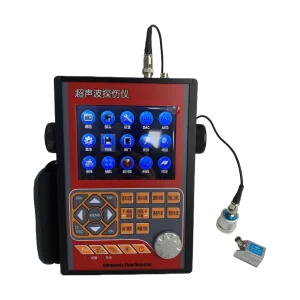
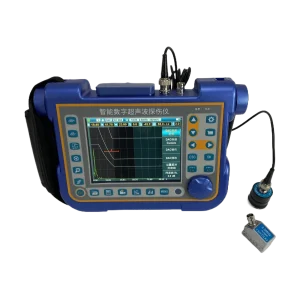
Aerospace and rail demand sensitivity and traceable records, so the instrument needs DAC curves and report output. Construction and petrochemical work is mostly in the field, where weight, battery life and ingress protection count for more.
Summary
One principle, six different concerns: fatigue cracking here, weld defects there, corrosion thinning elsewhere. Decide what you are preventing before deciding what to buy.
Related products
Tell us the workpiece, thickness range and accuracy you need — we will reply within 8 hours.